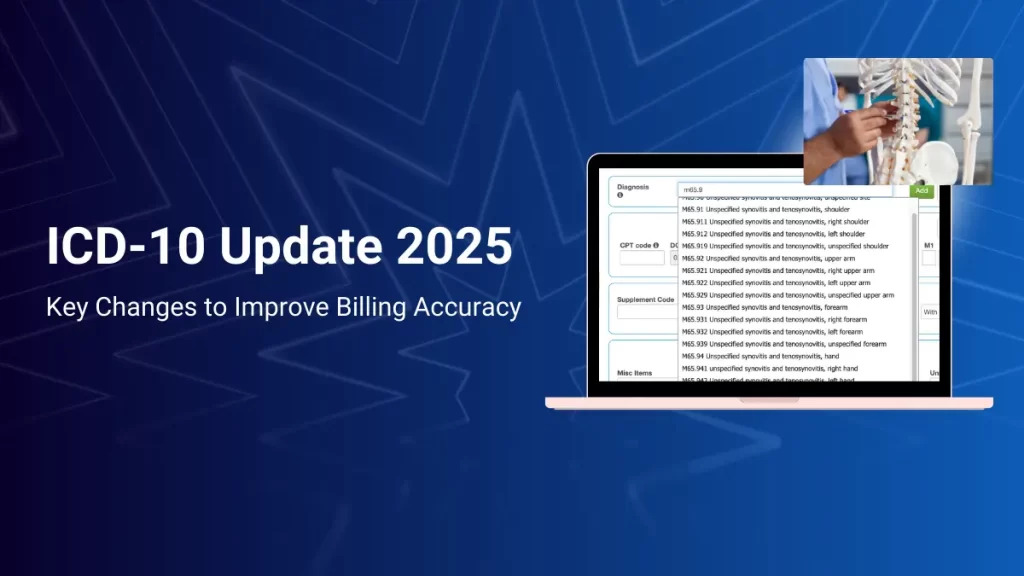
ICD-10 codes are the global standard for reporting medical diagnoses and health conditions in today’s healthcare system. Every disease, injury, symptom, and medical condition is translated into an ICD-10 code for accurate documentation, insurance claims, and healthcare data reporting.
Without correct ICD-10 coding, even a perfectly coded CPT procedure can lead to claim denials, audits, compliance risks, and revenue loss. For this reason, ICD-10 coding knowledge is essential for medical coders, billers, physicians, and healthcare administrators.
This guide explains:
-
- What ICD-10 codes are
-
- Their structure and organization
-
- Major ICD-10 code categories
-
- Common ICD-10 codes used in medical billing
- Coding best practices and common errors
What Are ICD-10 Codes?
ICD-10 stands for the International Classification of Diseases, 10th Revision. These codes are used to describe:
-
- Medical diagnoses
-
- Diseases
-
- Injuries
-
- Symptoms
-
- External causes of illness
In the United States, ICD-10-CM (Clinical Modification) is used for diagnosis coding in medical billing, while ICD-10-PCS is used for inpatient hospital procedures.
ICD-10 codes are mandatory for:
-
- Insurance claims
-
- Medicare and Medicaid billing
-
- Clinical documentation
-
- Public health reporting
-
- Risk adjustment and quality reporting
Structure of ICD-10 Codes
An ICD-10-CM code contains 3 to 7 alphanumeric characters, each with a specific meaning.
Character Breakdown
-
- 1st Character: Letter representing the chapter (e.g., A–Z)
-
- 2nd & 3rd Characters: Numeric characters defining the category
-
- 4th–6th Characters: Provide clinical details (severity, location, etiology)
-
- 7th Character: Used in special cases (e.g., initial encounter, subsequent encounter, sequela)
Example
-
- E11.9 – Type 2 diabetes mellitus without complications
-
- S72.001A – Fracture of unspecified part of neck of right femur, initial encounter
This extended structure allows greater clinical accuracy than earlier versions.
Major ICD-10 Code Chapters (Categories)
ICD-10-CM codes are divided into 21 official chapters, each representing a body system or medical condition group.
Common ICD-10 Chapters
| Chapter | Code Range | Category Description |
|---|---|---|
| Chapter 1 | A00–B99 | Infectious and parasitic diseases |
| Chapter 2 | C00–D49 | Neoplasms (cancer and tumors) |
| Chapter 4 | E00–E89 | Endocrine, nutritional, metabolic diseases |
| Chapter 5 | F01–F99 | Mental, behavioral disorders |
| Chapter 6 | G00–G99 | Nervous system diseases |
| Chapter 9 | I00–I99 | Circulatory system diseases |
| Chapter 10 | J00–J99 | Respiratory system diseases |
| Chapter 11 | K00–K95 | Digestive system diseases |
| Chapter 13 | M00–M99 | Musculoskeletal system disorders |
| Chapter 15 | O00–O9A | Pregnancy and childbirth |
| Chapter 18 | R00–R99 | Symptoms and abnormal findings |
| Chapter 19 | S00–T88 | Injuries and poisoning |
Most Common ICD-10 Codes Used in Medical Billing
Below is a list of frequently used ICD-10-CM codes across outpatient and inpatient billing:
-
- E11.9 – Type 2 diabetes without complications
-
- I10 – Essential (primary) hypertension
-
- J45.909 – Unspecified asthma, uncomplicated
-
- M54.5 – Low back pain
-
- R07.9 – Chest pain, unspecified
-
- K21.9 – Gastroesophageal reflux disease (GERD)
-
- N39.0 – Urinary tract infection, site not specified
-
- F32.9 – Major depressive disorder, single episode
-
- Z00.00 – General adult medical examination
-
- Z23 – Immunization encounter
These codes represent some of the highest-volume diagnosis codes in U.S. healthcare claims.
ICD-10-CM vs ICD-10-PCS
ICD-10-CM
-
- Used for diagnosis coding
-
- Applied in all outpatient and inpatient settings
-
- Used by physicians, clinics, and billers
ICD-10-PCS
-
- Used only for inpatient hospital procedures
-
- Describes surgical and technical procedures in hospitals
-
- Not used in physician office billing
Importance of ICD-10 Codes in Medical Billing
ICD-10 codes directly impact:
-
- Claim approval or denial
-
- Medical necessity validation
-
- Insurance reimbursement
-
- Risk adjustment scoring
-
- Quality reporting programs
Incorrect ICD-10 coding can result in:
-
- Claim rejections
-
- Underpayment or overpayment
-
- Compliance violations
-
- Payer audits
-
- Revenue loss
Common ICD-10 Coding Errors to Avoid
-
- Using unspecified codes when specific codes are available
-
- Missing 7th character extensions
-
- Coding diagnoses without proper documentation
-
- Mismatch between CPT and ICD-10 codes
-
- Duplicate diagnosis reporting
-
- Using outdated annual code versions
Avoiding these errors significantly improves first-pass claim acceptance rates.
Best Practices for Accurate ICD-10 Coding
-
- Always code to the highest level of specificity
-
- Review documentation before assigning diagnosis
-
- Use current-year ICD-10 code sets
-
- Apply laterality (right, left, bilateral) properly
-
- Follow official ICD-10 coding guidelines
-
- Perform regular internal coding audits
Relationship Between CPT and ICD-10 Codes
-
- CPT codes describe what service was performed
-
- ICD-10 codes describe why the service was performed
For a claim to be approved:
-
- The ICD-10 diagnosis must support medical necessity
-
- The CPT procedure must match the diagnosis
If this relationship is incorrect, claims are often denied.
Frequently Asked Questions (FAQs)
1. How many ICD-10 codes exist?
There are over 70,000 ICD-10-CM diagnosis codes currently in use.
2. Who updates ICD-10 codes each year?
The CDC and WHO are responsible for updates and annual revisions.
3. Are ICD-10 codes the same worldwide?
The base ICD-10 system is global, but each country uses its own modified version.
4. What replaced ICD-9?
ICD-10 officially replaced ICD-9 in the U.S. on October 1, 2015.
5. Can incorrect ICD-10 coding lead to audits?
Yes. Repeated incorrect diagnosis coding can trigger payer audits and compliance reviews.
Conclusion
ICD-10 codes form the backbone of clinical documentation, medical billing, and healthcare data reporting. Accurate ICD-10 coding ensures that medical necessity is properly justified, claims are processed correctly, and healthcare providers receive appropriate reimbursement.
By understanding ICD-10 structure, categories, and best coding practices, healthcare professionals can significantly reduce claim denials, improve compliance, and strengthen revenue cycle performance.
Whether you are a student, coder, biller, or administrator, mastering ICD-10 coding is a critical skill in today’s healthcare industry.